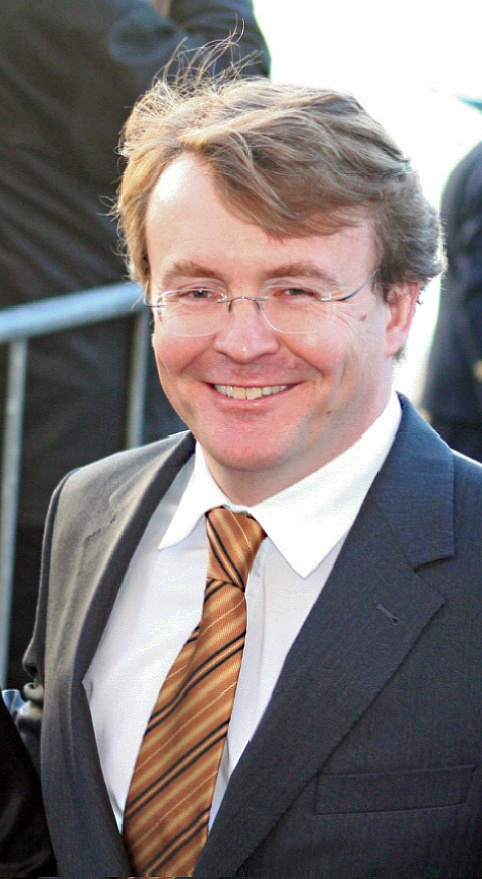
Prince Friso Of Orange-Nassau: From Royal Succession to Tragic Avalanche
The life of
Prince Friso Of Orange-Nassau was a compelling narrative of duty, personal choice, and unforeseen tragedy. Born into one of Europe's most prominent royal families, he was destined for a life deeply entwined with the Dutch monarchy. Yet, his journey diverged significantly, marked by a courageous decision to prioritize love over a crown, culminating in a devastating accident that sent shockwaves across the Netherlands and beyond. His story is a powerful reminder of the human element behind royal titles, showcasing a man of remarkable intellect and determination whose life was cut short too soon.
Early Life, Education, and a Royal Calling
Born Johan Friso Bernhard Christiaan David on September 25, 1968, in Utrecht, Netherlands,
Prince Friso Of Orange-Nassau was the second son of Queen Beatrix of the Netherlands and Prince Claus von Amsberg. He was the younger brother of the current monarch, King Willem-Alexander, and grandson of Queen Juliana. From his birth, Prince Friso was an integral part of the Dutch Royal Family, initially holding the coveted position of second in line to the Dutch throne.
Despite his royal lineage, Friso was a remarkably grounded and academically driven individual. His educational path reflected a keen intellect and a broad range of interests, distinguishing him as a modern royal seeking a substantial professional life. He embarked on an ambitious academic journey that began with studies in mechanical engineering at the University of California, Berkeley, from 1986 to 1988. He then returned to the Netherlands to pursue aerospace engineering at Delft University of Technology, graduating in 1994. Not content with a technical foundation alone, he further expanded his knowledge by studying business economics at Erasmus University Rotterdam, completing this in 1995, and earning an MBA from INSEAD in 1997. This diverse and rigorous academic background laid the groundwork for a distinguished professional career, far removed from the traditional ceremonial duties often associated with royalty.
A Professional Path Forged in Business and Innovation
Prince Friso's extensive education was not merely for show; it propelled him into a serious and impactful professional life. He was a man who embraced challenges and sought to contribute meaningfully through his work. His career began in management consulting at McKinsey & Company, where he honed his strategic thinking and problem-solving skills. He later transitioned into the banking sector, working at Rabobank.
Perhaps one of his most notable professional roles was as the chief financial officer (CFO) of TNO, the Netherlands Organisation for Applied Scientific Research. This position allowed him to leverage his technical and business acumen in an organization dedicated to innovation and scientific advancement. His tenure at TNO underscored his commitment to practical application and leadership in a field critical to national development. In a move that further solidified his independent spirit and entrepreneurial drive, Prince Friso eventually founded his own private equity firm. This diverse professional trajectory demonstrated his dedication to building a career based on merit and expertise, proving he was much more than just a royal figurehead. His commitment to acquiring a broad technical and business education highlights a growing trend among contemporary royals to carve out meaningful, independent careers, contributing to society through their own skills and efforts rather than solely relying on inherited status.
Love, Lost Succession, and a New Chapter
The year 2003 marked a pivotal moment in the life of
Prince Friso Of Orange-Nassau, one that would redefine his relationship with the Dutch monarchy. He announced his intention to marry Mabel Wisse Smit, a woman he deeply loved. However, this union was not to proceed without significant controversy. Under Dutch law, members of the Royal House wishing to marry must seek an "Act of Consent" from Parliament. This process involves a governmental vetting of the prospective spouse, ensuring transparency and suitability for a public role.
The Dutch government ultimately refused parliamentary approval for their marriage. The primary reason cited was the provision of "incomplete and incorrect information" regarding Mabel Wisse Smit's past social ties to Klaas Bruinsma, a notorious Dutch drug trafficker who had been assassinated in 1991. The government expressed concerns that the extent of her contact with Bruinsma had not been fully disclosed, leading to a breakdown of trust.
Faced with a choice between his place in the line of succession and his commitment to Mabel, Prince Friso made a profound decision: he chose love. By marrying Mabel Wisse Smit without the required Act of Consent in 2004, he knowingly forfeited his membership of the Dutch Royal House and, crucially, his position in the line of succession to the throne. This was a monumental sacrifice, highlighting his conviction and dedication to his partner. Together, they embarked on a new, more private chapter of their lives, raising two daughters, Joanna Zaria Nicoline Milou (born 2005) and Luana Margalina (born 2006). Their story, though marked by controversy, stands as a testament to personal conviction over royal prerogative. For a deeper dive into this significant period, read
Prince Friso: Love, Lost Throne, and a Remarkable Career.
The Tragic Avalanche and Its Aftermath
On February 17, 2012, tragedy struck, forever altering the course of
Prince Friso Of Orange-Nassau's life and profoundly impacting his family and the nation. While skiing off-piste—meaning outside designated and controlled areas—in Lech, Austria, Prince Friso was buried under an avalanche. Despite being trapped for a relatively short time, the consequences were catastrophic.
He was rescued and rushed to a hospital in Innsbruck, initially reported to be in a critical but stable condition. However, subsequent neurological tests delivered devastating news. According to his doctor, Wolfgang Koller, after an agonizing fifty minutes of cardiopulmonary resuscitation (CPR) performed in moderate hypothermia, Prince Friso suffered massive brain damage due specifically to oxygen shortage. This severe hypoxic brain injury left him in a coma. The initial hopes for recovery, which had been higher given the relatively short burial time, quickly dwindled.
His condition progressed from a deep coma to a minimally conscious state, but he never regained full consciousness. For a year and a half, his family held vigil, hoping for a miracle that never came. On August 12, 2013, at Huis ten Bosch Palace in the Netherlands,
Prince Friso Of Orange-Nassau died from complications related to the severe brain damage sustained in the avalanche. His passing marked a somber end to a life that had been full of promise and achievement.
The tragic incident serves as a stark reminder of the inherent dangers of off-piste skiing, even for experienced individuals. Avalanche safety is paramount, and experts consistently advise skiers to:
- Check conditions: Always consult local avalanche forecasts and obey warnings.
- Stay in bounds: Skiing off-piste significantly increases risk; stick to marked trails unless highly experienced and properly equipped.
- Carry essential gear: An avalanche transceiver, probe, and shovel are vital for rapid rescue.
- Ski with a buddy: Never venture into avalanche terrain alone.
- Get training: Enroll in avalanche safety courses to understand snowpack, terrain, and rescue techniques.
The loss of Prince Friso underscored the unpredictability and unforgiving nature of the mountains. For more on his life and the aftermath of the accident, consider reading
Remembering Prince Friso: Life, Accident, and Royal Legacy.
Conclusion
The life of
Prince Friso Of Orange-Nassau was a remarkable journey that touched upon themes of duty, love, personal ambition, and profound tragedy. From his birth as a royal prince with a direct claim to the Dutch throne, he chose a path less traditional, building a formidable professional career and prioritizing personal happiness over royal convention. His intellect, drive, and courageous decision to marry the woman he loved, even at the cost of his succession rights, painted a picture of a modern royal forging his own identity. His devastating accident and subsequent passing left a lasting void, reminding the world of the fragile nature of life and the deep impact individuals can have, regardless of their royal status. Prince Friso's legacy endures not just as a member of the House of Orange-Nassau, but as a man who lived authentically, loved deeply, and pursued excellence in all his endeavors.